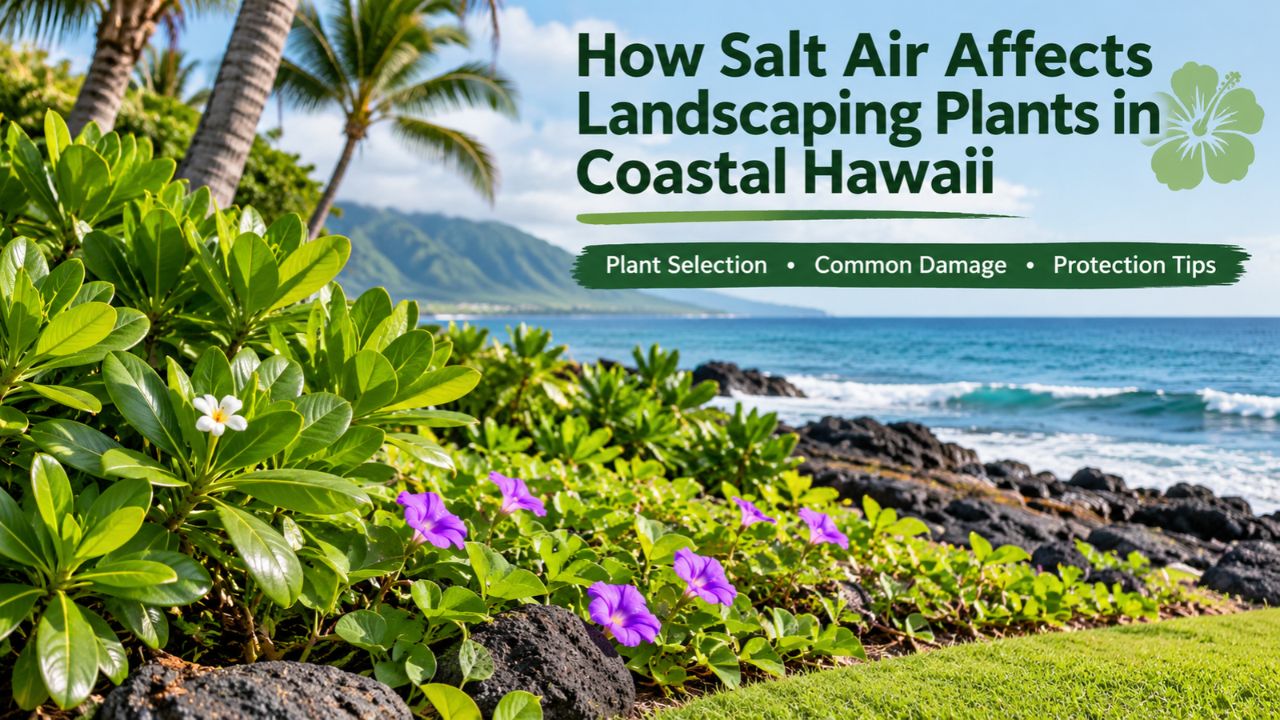
Living near the ocean in Hawaii offers beautiful views, refreshing trade winds, and a tropical outdoor environment. However, coastal properties also face unique landscaping challenges. One of the most common is exposure to salt air, which can gradually damage plants, affect soil conditions, and make it difficult to maintain healthy outdoor spaces.
Ocean winds carry tiny salt particles that settle on leaves, stems, and surrounding soil. Over time, repeated exposure can cause leaf discoloration, reduced plant growth, and damage to sensitive vegetation. Strong coastal winds, intense sunlight, and limited rainfall in some areas can make these conditions even more challenging.
For homeowners and commercial property managers, choosing the right vegetation is an important part of maintaining an attractive coastal landscape. Understanding how salt air affects plants can help you make better decisions about plant selection, landscape design, and ongoing maintenance.
In this guide, we explain the effects of salt exposure, identify plants suited to coastal conditions, and share practical ways to protect landscaping plants in Hawaii.
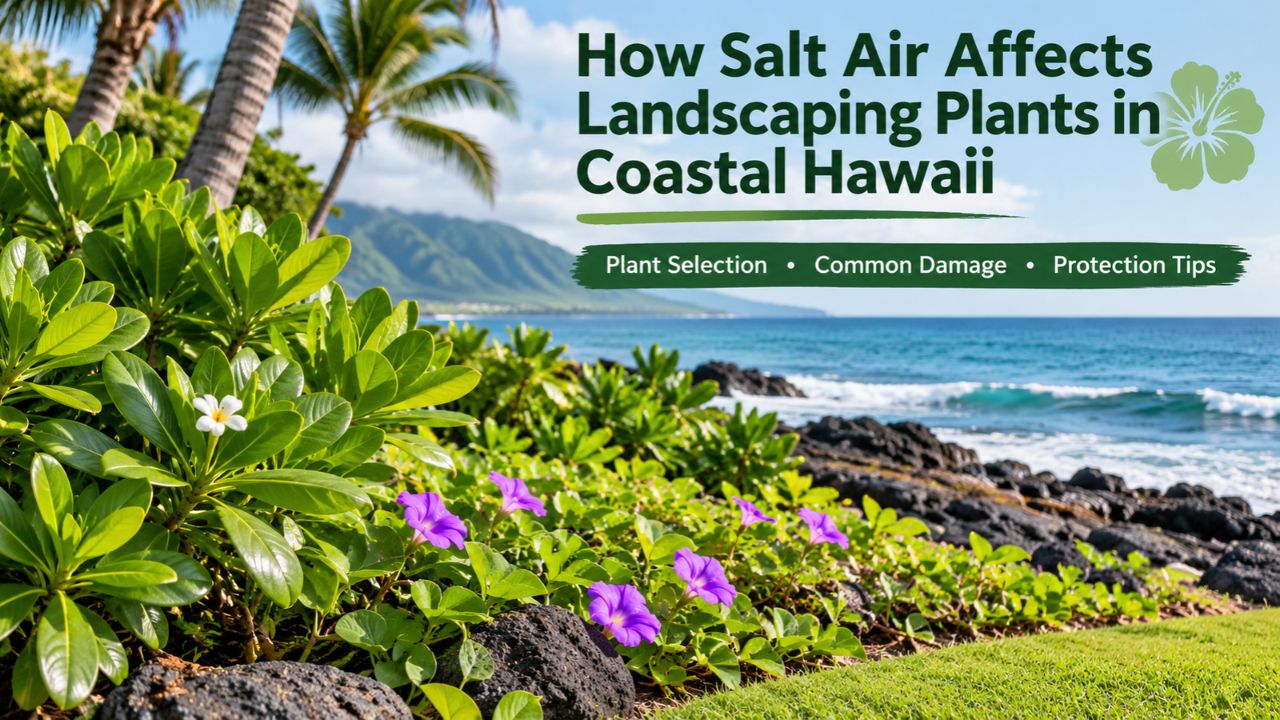
What Is Salt Air and How Does It Affect Landscaping Plants?
Salt air refers to tiny salt particles carried by ocean winds and sea spray. In coastal areas of Hawaii, these particles can travel inland and settle on nearby vegetation, soil, and outdoor surfaces.
When salt accumulates on plant leaves, it can interfere with normal plant functions. Salt can also enter the soil, affecting the roots and making it more difficult for plants to absorb water.
Excessive salt exposure can cause dehydration, leaf damage, and even plant death in sensitive species.
Salt exposure can affect landscaping plants in several ways:
- Leaf damage: Salt deposits can cause burning along leaf tips and edges.
- Water absorption problems: High salt concentrations make it harder for roots to absorb water.
- Soil salinity: Accumulated salts can affect soil conditions and plant growth.
- Reduced plant development: Continued exposure can weaken plants and limit new growth.
- Increased environmental stress: Salt exposure combined with strong winds and sunlight can make plant damage worse.
The severity of salt damage depends on the property’s distance from the shoreline, wind direction, plant species, soil conditions, and exposure to ocean spray.
Common Signs of Salt Damage in Coastal Landscaping
Salt damage does not always appear immediately. Plants may gradually develop symptoms after repeated exposure to ocean spray.
Recognizing these warning signs can help homeowners address the problem before significant damage occurs.
1. Brown Leaf Tips and Edges
One of the most recognizable signs of salt damage is browning along leaf margins and tips.
Salt accumulation can cause plant tissues to lose moisture, resulting in dry, discolored areas. Sensitive plants may develop brown patches that gradually spread across their leaves.
2. Yellowing and Discolored Leaves
Excessive salt exposure can interfere with normal plant growth and nutrient balance. As a result, leaves may turn yellow, develop unusual discoloration, or appear dull and unhealthy.
Some plants may also develop a whitish or bluish appearance.
3. Premature Leaf Drop
When salt exposure becomes severe, plants may begin dropping leaves earlier than normal.
Repeated leaf loss can weaken the plant and affect its ability to produce new growth. Sensitive ornamental plants may struggle to recover if coastal exposure continues.
4. Wilting Despite Adequate Water
Salt stress can make it difficult for plants to absorb water through their roots.
This means a plant may appear dehydrated even when the surrounding soil contains sufficient moisture. Simply adding more water may not solve the underlying problem, particularly if the soil has poor drainage.
5. Slow Growth and Reduced Flowering
Plants experiencing ongoing salt stress may produce fewer flowers, develop smaller leaves, and show slower overall growth.
Over time, sensitive plants may lose their appearance and require replacement if the growing conditions do not improve.
Which Plants Are Better Suited to Coastal Landscaping in Hawaii?
Choosing appropriate vegetation is one of the most important decisions when developing a coastal landscape.
Plants that tolerate salt exposure and strong winds are generally better suited to properties close to the ocean. Some Hawaiian native and indigenous species are naturally adapted to these conditions.
The University of Hawaii College of Tropical Agriculture and Human Resources (CTAHR) provides guidance on selecting plants according to their salt and wind tolerance.
Here are several options worth considering.
1. Naupaka Kahakai (Scaevola taccada)
Naupaka kahakai is a familiar coastal plant in Hawaii and is well adapted to seaside environments.
It tolerates salt spray, wind, and sandy conditions, making it a useful option for coastal gardens. Its dense growth also makes it suitable for hedges, property borders, and natural-looking landscape designs.
2. Beach Morning Glory (Ipomoea pes-caprae)
Beach morning glory, also known as pōhuehue, is a coastal groundcover that grows naturally in sandy environments.
Its spreading growth habit helps cover exposed ground, making it useful for appropriate coastal landscape applications. Its purple flowers also add visual interest.
3. ʻĀkulikuli (Sesuvium portulacastrum)
ʻĀkulikuli is a low-growing coastal groundcover known for its ability to tolerate salty conditions.
It can be useful in exposed landscape areas where many traditional ornamental plants may struggle. Its succulent foliage helps it cope with challenging coastal environments.
4. Hinahina Kū Kahakai (Heliotropium anomalum var. argenteum)
Hinahina kū kahakai is a Hawaiian coastal plant with attractive silvery foliage.
It is adapted to exposed coastal conditions and can tolerate salt, wind, and dry environments. Its low-growing habit makes it suitable for certain coastal garden designs.
5. ʻIlima (Sida fallax)
ʻIlima is a Hawaiian native plant with attractive yellow-orange flowers and adaptability to coastal environments.
Depending on the variety and growing conditions, it can be used as a groundcover or a low-growing shrub. It is a useful option for landscapes that incorporate native Hawaiian vegetation.
6. ʻAʻaliʻi (Dodonaea viscosa)
ʻAʻaliʻi is a versatile Hawaiian indigenous shrub or small tree that tolerates wind, salt, and relatively dry conditions.
Its attractive foliage and colorful seed capsules make it a valuable addition to suitable tropical landscapes.
Important: Salt tolerance varies between plant varieties and growing conditions. Even highly salt-tolerant species can experience damage during severe storms or prolonged exposure. Before selecting plants, evaluate the property’s actual environmental conditions and consult appropriate local plant guidance.
For additional plant-selection ideas, read our guide to native Hawaiian plants for a low-maintenance landscape.
How to Protect Landscaping Plants From Salt Air
Selecting salt-tolerant vegetation is a good starting point, but proper landscape management is equally important.
The following practices can help reduce salt-related stress and support healthier coastal gardens.
1. Rinse Salt Deposits From Plant Leaves
When plants receive regular ocean spray, salt can accumulate on their foliage.
Occasionally rinsing leaves with fresh water can help remove surface salt deposits. This can be particularly useful after periods of strong onshore winds or heavy ocean spray.
Use freshwater and avoid unnecessarily saturating the soil. The frequency of rinsing will depend on the property’s exposure and plant sensitivity.
2. Create Natural Windbreaks
Strategically positioned salt-tolerant plants can help reduce direct exposure to coastal winds.
For example, a row of suitable coastal shrubs can provide some protection for more sensitive plants growing behind them.
This layered approach allows landscape designers to incorporate a wider variety of vegetation while reducing direct salt exposure.
3. Improve Soil Drainage
Salt accumulation in soil can make it difficult for plant roots to absorb water.
Proper soil preparation and drainage help prevent excessive salt buildup around root systems. Where soil salinity is a concern, professional assessment can help determine whether additional soil management is necessary.
4. Use Appropriate Irrigation Practices
Freshwater irrigation can help flush accumulated salts from well-drained soil when conditions allow.
However, irrigation should be based on soil type, drainage capacity, plant requirements, and local water conditions.
Avoid excessive watering in areas where drainage is poor, as this can create additional root problems.
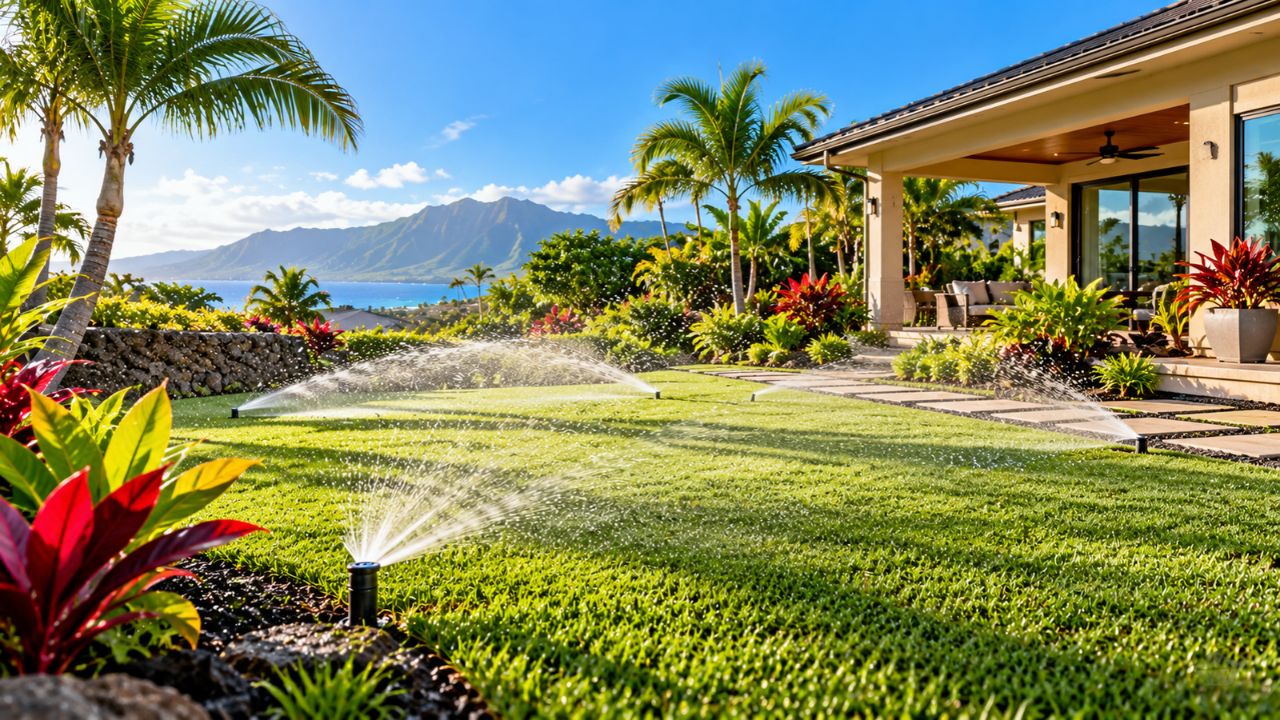
A properly planned irrigation system can help deliver the right amount of water to different planting areas.
5. Apply Organic Mulch
A suitable organic mulch layer can help regulate soil moisture and temperature while protecting the soil surface.
Mulch also reduces moisture loss during sunny and windy conditions.
Keep mulch away from direct contact with plant stems and trunks to reduce the risk of moisture-related problems.
6. Inspect Plants Regularly
Routine landscape inspections help identify early signs of salt damage, pest activity, and other environmental stresses.
Removing severely damaged foliage when appropriate and adjusting irrigation or plant placement can help maintain a healthier landscape.
Regular maintenance is especially important for commercial properties, community associations, and residential landscapes exposed to coastal conditions.
Why Coastal Landscape Design Requires a Different Approach
Landscaping near the ocean requires more than simply choosing attractive tropical plants. Every property has its own environmental conditions, including wind exposure, soil composition, sunlight, drainage, and proximity to the shoreline.
A successful coastal landscape should consider these factors before selecting plants or planning installation.
For example, a property directly exposed to ocean winds may require a different planting arrangement from a home located several streets inland.
Professional landscape planning can help determine:
- Which plants are suitable for the property’s salt exposure.
- Where to position wind-tolerant shrubs and trees.
- How to arrange plants according to their sunlight and water requirements.
- Whether soil preparation or drainage improvements are needed.
- How to maintain visual appeal while reducing long-term plant replacement.
If you are planning a new outdoor space, professional landscape installation services can help incorporate appropriate plants, irrigation systems, landscape structures, and other outdoor elements.
Thoughtful planning at the beginning can reduce future maintenance challenges and help create a landscape suited to the property’s coastal environment.
Coastal Landscape Maintenance for Long-Term Plant Health
Even carefully selected coastal plants need appropriate maintenance to remain healthy and attractive.
Salt accumulation, strong winds, changing rainfall patterns, and plant growth can gradually affect the appearance of an outdoor space.
A regular maintenance program should include:
- Inspecting leaves and stems for salt damage.
- Removing dead or damaged plant material when necessary.
- Checking irrigation systems for proper water distribution.
- Monitoring soil drainage and moisture conditions.
- Pruning plants according to their growth requirements.
- Replacing vegetation that cannot tolerate the property’s conditions.
For homeowners and property managers, consistent care can help protect landscaping investments and maintain the overall appearance of outdoor spaces.
Our residential and commercial landscape maintenance services help properties across Oʻahu maintain attractive and functional outdoor environments.
You can also read our article on low-maintenance Hawaii landscaping ideas for busy homeowners for additional ways to simplify ongoing landscape care.
Frequently Asked Questions
1. What plants are best for coastal areas in Hawaii?
Some plants suited to coastal conditions in Hawaii include naupaka kahakai, beach morning glory, ʻākulikuli, hinahina kū kahakai, ʻilima, and ʻāʻaliʻi. These plants have adaptations that help them tolerate salt exposure and coastal winds. The best choice depends on the property’s soil, sunlight, drainage, and exposure to ocean spray.
2. Can salt air damage tropical plants?
Yes. Salt air can damage tropical plants that are sensitive to salt exposure. Salt particles deposited on leaves can cause brown edges, yellowing, and premature leaf drop. Salt accumulation in soil can also interfere with water absorption and root health.
3. How do you remove salt deposits from plant leaves?
Gently rinse affected leaves with fresh water to remove surface salt deposits. This is particularly helpful after periods of strong coastal winds or ocean spray. Regular inspections can help identify salt accumulation before it causes significant damage.
4. How far inland does salt air affect landscaping plants?
There is no fixed distance at which salt exposure stops affecting plants. Coastal winds, shoreline conditions, elevation, vegetation barriers, and weather patterns all influence how far salt particles travel inland. Properties closer to exposed shorelines generally experience greater salt exposure, but some inland properties can also be affected.
5. How can you protect a coastal garden from salt spray?
Choose salt-tolerant plants, establish suitable natural windbreaks, rinse salt deposits from foliage when necessary, maintain proper soil drainage, and use appropriate irrigation practices. Regular landscape inspections also help identify and address early signs of salt damage.
Create a Healthier Coastal Landscape in Hawaii
Salt air is a natural part of living near the ocean in Hawaii, but it does not have to prevent you from enjoying a beautiful outdoor environment.
Understanding salt exposure, recognizing early plant damage, and selecting vegetation adapted to coastal conditions can help protect your landscape over time.
From native coastal groundcovers to salt-tolerant shrubs, the right plant choices can make outdoor spaces more resilient. Combining appropriate vegetation with proper irrigation, drainage, and regular maintenance provides a stronger foundation for long-term landscape health.
At Advantage Landscape Hawaii, Inc., we understand the importance of designing, installing, and maintaining landscapes that work with Hawaii’s unique environmental conditions.
Whether you are planning a new outdoor space or improving an existing property, thoughtful landscape planning can help create an attractive and functional environment.
Looking to improve your property’s coastal landscape? Contact Advantage Landscape Hawaii to discuss your landscaping needs and request an estimate.
Call (808) 737-7963 or visit Hawaii Landscape Services to get started.
Additional Resources
- Salt and Wind Tolerance of Landscape Plants for Hawaiʻi – University of Hawaiʻi CTAHR
- Native Plants for Water Conservation – University of Hawaiʻi
Plant recommendations should be evaluated for local conditions, including salt exposure, wind, drainage, and potential ecological impacts. Native and non-invasive plant choices should be prioritized where suitable.