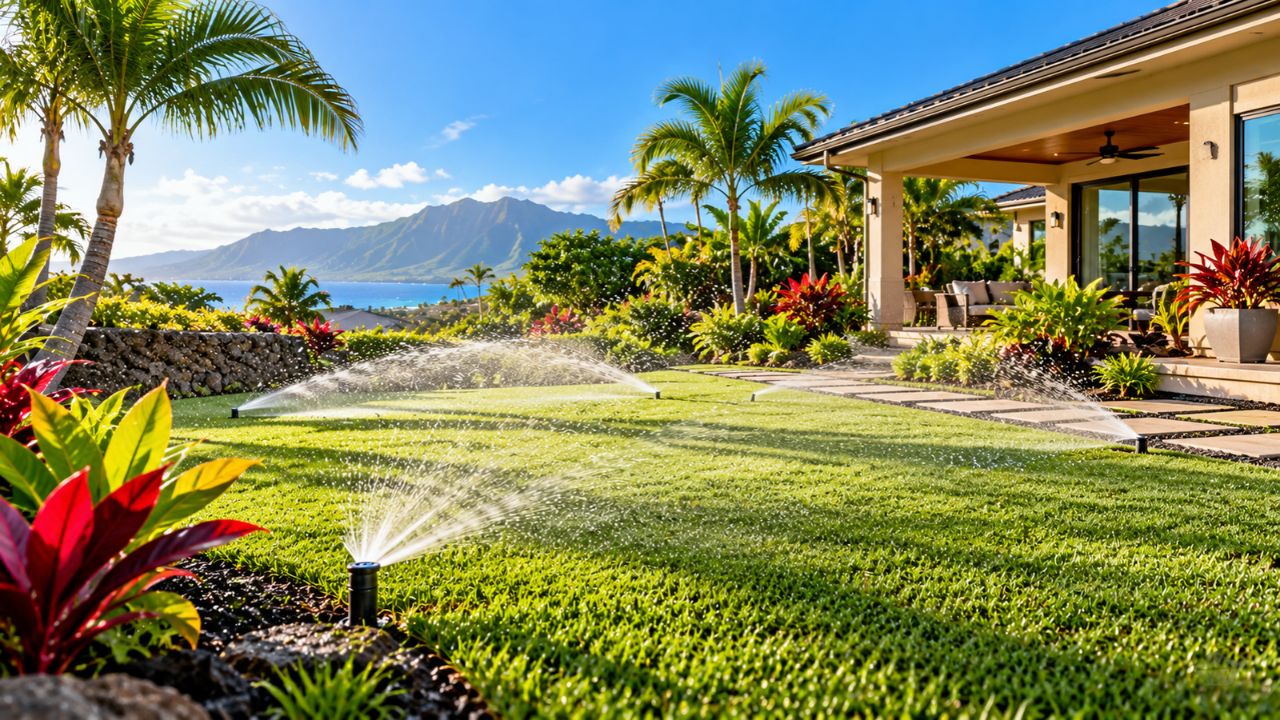
A landscape irrigation system should keep your lawn, trees, and garden plants healthy without using more water than necessary. However, damaged sprinkler heads, leaking irrigation lines, incorrect watering schedules, and poor water distribution can cause significant water waste.
For homeowners and commercial property managers in Hawaii, irrigation problems can be especially frustrating. Rainfall, wind exposure, sunlight, soil conditions, and the location of a property can all affect how much water a landscape needs.
The good news is that many irrigation problems have recognizable warning signs. By identifying the source of water waste and making appropriate adjustments, you can improve irrigation efficiency while helping protect your landscape.
In this guide, we explain the common reasons a landscape irrigation system wastes water, how to identify potential problems, and what you can do to address them.
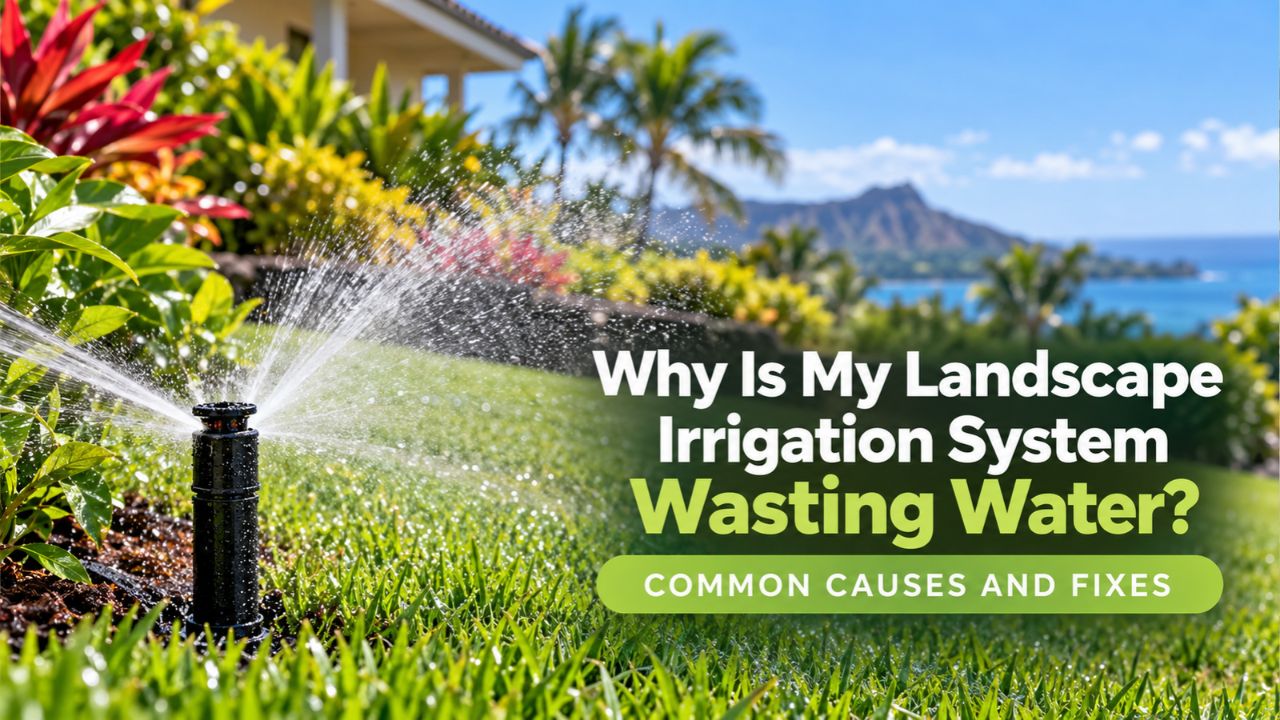
1. Broken or Leaking Sprinkler Heads
Damaged sprinkler heads are one of the first things to check when an irrigation system appears to be wasting water. Sprinkler heads can crack, become clogged, shift out of position, or suffer damage from lawn equipment and regular foot traffic.
A malfunctioning sprinkler may release too much water in one area while leaving nearby plants or grass insufficiently watered.
Common warning signs include:
- Water spraying sideways or onto sidewalks instead of the lawn.
- Water bubbling around the sprinkler head.
- A sprinkler head that fails to rise or retract properly.
- Persistent puddles around sprinkler locations.
- Water continuing to flow from a head after the irrigation zone shuts off.
How to fix it: Run each irrigation zone briefly and observe the sprinkler heads while the system operates. Clean accessible nozzles, adjust the spray direction, and replace damaged components when necessary. If water continues flowing after a zone shuts off, a valve problem may require professional attention.
Inspecting sprinkler heads regularly can help prevent small problems from developing into persistent sources of water waste.
2. Incorrect Sprinkler Coverage and Overspray
An irrigation system can operate exactly as programmed and still waste water if its coverage is poorly adjusted.
For example, a sprinkler may spray water onto a driveway, pavement, building wall, or fence rather than the intended planting area. Wind can also carry fine droplets away from the target area before they reach the soil.
Overspray is particularly noticeable when sidewalks or paved areas become wet every time the sprinklers operate.
How to fix it: Check the direction and spray pattern of each sprinkler head. Adjust the coverage so water reaches the intended lawn or planting bed without unnecessarily watering surrounding surfaces.
Where appropriate, consider whether different sprinkler nozzles or a revised layout could improve coverage. The correct solution depends on the irrigation equipment, landscape dimensions, and water pressure.
For planting beds containing shrubs or other plants with concentrated root zones, drip irrigation may be a more suitable option than overhead sprinklers.
3. Watering Schedules That Do Not Match Plant Needs
A watering schedule that worked well several months ago may no longer suit the landscape. Fixed schedules can continue running during rainy periods or deliver more water than plants need.
Overwatering does not necessarily make a landscape healthier. Excess moisture can contribute to root problems, nutrient loss, runoff, and conditions that encourage certain plant diseases.
In Hawaii, watering requirements can vary considerably between locations. A sunny, exposed property may dry out faster than a shaded garden or a landscape that receives frequent rainfall.
How to fix it:
- Review the irrigation controller’s watering days, start times, and run times.
- Adjust watering based on recent rainfall and actual soil moisture.
- Account for differences between lawns, shrubs, trees, and other planting areas.
- Check whether the controller is running multiple cycles unnecessarily.
- Reassess watering needs when weather conditions change.
Watering in the early morning can help reduce evaporation and wind-related water loss. However, the most appropriate schedule depends on the plant species, soil, irrigation method, and local conditions.
The objective is to provide sufficient moisture to the root zone without repeatedly saturating the soil.
4. Leaking Irrigation Pipes, Fittings, or Valves
Not every irrigation leak is visible at the surface. Underground pipes, connectors, and valves can develop leaks that allow water to escape while the system operates—or sometimes even when it is supposed to be off.
These leaks can waste water over time and may damage nearby planting areas or hardscaping.
Look for these potential warning signs:
- A patch of ground that remains unusually wet.
- Water pooling in an area that receives little direct irrigation.
- A sudden change in water pressure.
- Water bills that increase without an obvious explanation.
- Water flowing from a sprinkler zone when it should be inactive.
How to fix it: Inspect accessible fittings and visible pipes for moisture or damage. If you suspect an underground leak, a damaged valve, or a persistent pressure problem, arrange for a qualified irrigation professional to investigate.
Avoid digging blindly around suspected irrigation lines. Locating the affected section before undertaking repairs can help prevent additional damage.
For larger properties and commercial landscapes, periodic system inspections can help identify hidden issues before they become more expensive to address.
5. Clogged or Misaligned Sprinkler Nozzles
Sprinkler nozzles can become obstructed by soil, debris, mineral deposits, or plant material. When this happens, the spray pattern may become uneven, creating dry spots in some areas and excessive watering in others.
Misaligned heads can create similar problems, particularly when landscape growth or maintenance activities change the way water moves across a property.
How to fix it: Turn off the system before cleaning or inspecting sprinkler components. Follow the manufacturer’s instructions to remove accessible debris and check whether the nozzles are positioned correctly.
After cleaning, run the zone again to confirm that the spray pattern has improved.
If the sprinkler still produces uneven coverage, the problem may involve water pressure, a damaged nozzle, or an unsuitable sprinkler layout. Replacing parts without identifying the underlying cause may not resolve the issue.
6. Excessive Water Runoff on Sloped or Compacted Ground
Water waste does not always originate inside the irrigation system. Soil conditions and landscape grading can also prevent water from reaching plant roots efficiently.
On sloped properties, water may flow downhill before the soil has time to absorb it. Compacted soil can also slow infiltration, allowing water to collect on the surface or run onto paved areas.
The result is often a combination of wet patches, erosion, and dry areas that appear to need additional watering.
How to fix it: Observe the landscape while the irrigation system operates. If water begins running off before the soil absorbs it, shorter watering cycles with appropriate pauses between them may help.
This approach is sometimes called cycle-and-soak irrigation. It allows water to infiltrate gradually rather than being applied continuously.
For persistent problems, evaluate soil compaction, drainage, slope, and irrigation-zone design. Depending on the site, aeration, grading adjustments, or drainage improvements may be more effective than simply reducing or increasing the watering time.
7. Poor Irrigation-Zone Design
An irrigation zone should deliver water in a way that matches the needs of the area it serves. Problems can occur when sprinklers with different precipitation rates are grouped together or when plants with very different watering requirements share the same schedule.
For example, a lawn and a bed of drought-tolerant shrubs may not need the same amount of water or the same delivery method.
If the system waters both areas identically, one may receive too much water while the other receives too little.
How to fix it: Review how the irrigation zones are organized. Where practical, separate areas with different plant types, sun exposure, soil conditions, or water requirements.
Sprinkler irrigation may be suitable for lawns, while drip irrigation can deliver water more directly to many garden beds and shrubs.
If the landscape has recently changed, such as after new plants were installed or planting beds were expanded, the irrigation layout and controller settings may also need adjustment.
8. Ignoring Hawaii’s Changing Weather Conditions
Hawaii’s climate does not create identical irrigation needs across every property. Rainfall, trade winds, direct sunlight, elevation, and local exposure can all influence how quickly the soil loses moisture.
A landscape receiving regular rainfall may not need the same irrigation schedule as a sunny, wind-exposed property during a dry period.
Continuing to water according to an unchanged schedule can lead to unnecessary water use.
How to fix it: Check recent rainfall and monitor the moisture level of the soil before adding more water. Adjust irrigation schedules when conditions change, while making sure the root zones still receive adequate moisture.
Rain sensors and weather-responsive controllers can help automate some adjustments, but they should be configured correctly for the property. A rain sensor may not fully account for differences in soil moisture, plant needs, or rainfall across separate areas of a large landscape.
Regular observation remains important, even when the system includes automated controls.
9. When Should You Call a Professional?
Some irrigation adjustments are relatively straightforward, but recurring problems may indicate that the system needs more than routine maintenance.
Consider professional assistance if you notice persistent leaks, unexplained water use, recurring pressure changes, widespread uneven coverage, or water runoff that continues despite schedule adjustments.
A professional irrigation inspection can help assess sprinkler performance, valves, accessible pipework, controller settings, and the suitability of the existing system for the landscape.
For larger residential and commercial properties, routine inspections can also help maintain consistent irrigation performance across multiple zones.
Hawaii Landscape Services provides landscape installation and maintenance for residential and commercial properties across Oʻahu, with certified irrigation technicians on staff. Learn more about its landscape maintenance services or landscape installation services.
Conclusion
A landscape irrigation system may waste water because of leaking sprinkler heads, damaged pipes, poor coverage, incorrect schedules, or soil and drainage problems. Identifying the underlying cause is the first step toward improving efficiency without compromising plant health.
Regular inspections, appropriate watering schedules, and well-adjusted irrigation zones can help reduce unnecessary water use. When problems persist, professional assessment can help determine whether the system needs repairs, adjustments, or a more substantial redesign.
For Hawaii property owners, effective irrigation management means accounting for local weather, site conditions, and the needs of the plants being watered. A properly maintained system can support a healthy landscape while helping avoid preventable water waste.
If your property has recurring irrigation problems, contact Hawaii Landscape Services to discuss your landscape installation or maintenance needs.