Artificial turf is a popular landscaping option for homeowners and commercial property owners in Hawaii. It provides a consistently green appearance, reduces the need for mowing, and can make outdoor spaces easier to maintain. However, one important question often comes up before installation: What happens to artificial turf when it rains heavily?
Hawaii’s tropical climate brings frequent rain showers, seasonal downpours, and periods of intense rainfall. Without proper drainage, water can collect beneath synthetic grass, creating puddles, unpleasant odors, and potentially damaging the turf’s foundation.
Understanding artificial turf drainage in Hawaii is essential when planning a new installation. The quality of the turf matters, but the preparation underneath it plays an equally important role in determining how effectively rainwater drains away.
Homeowners considering artificial grass can learn more about our synthetic turf installation solutions for residential and commercial properties across Oʻahu.
In this guide, we explain how artificial turf handles rainfall, what causes drainage problems, and what homeowners should consider before installing synthetic grass in Hawaii.
How Does Artificial Turf Drain Rainwater?
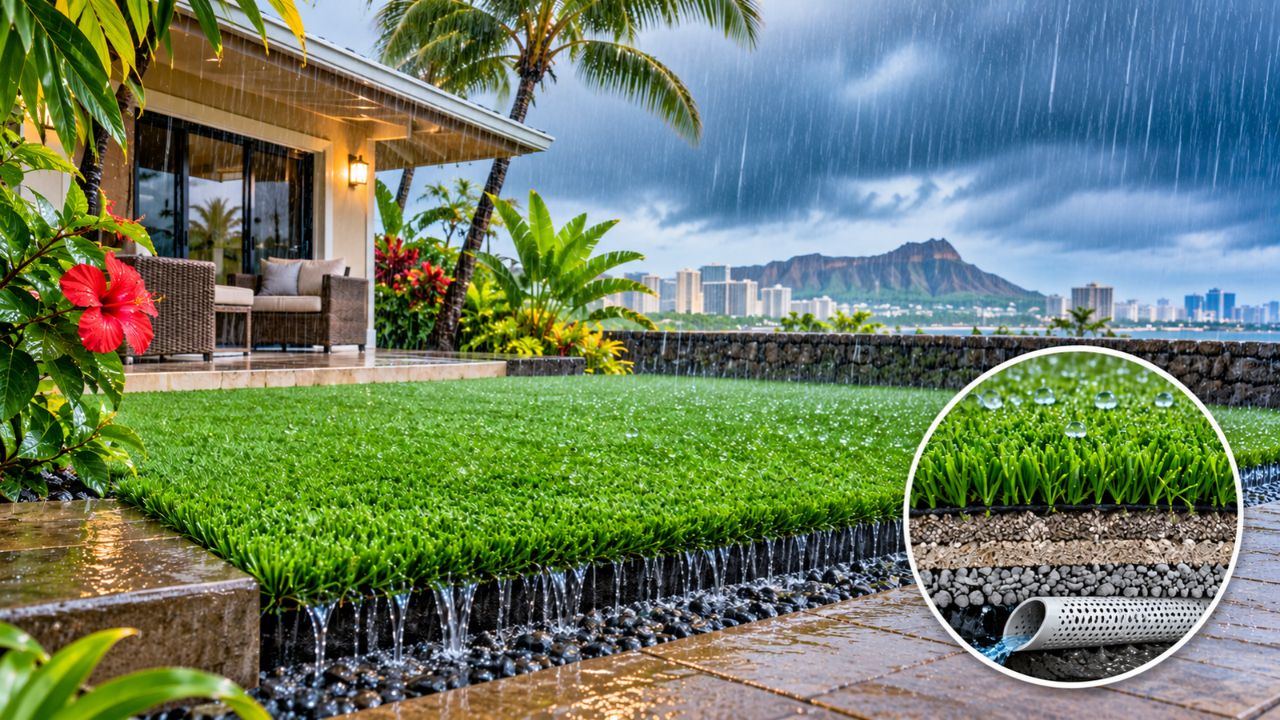
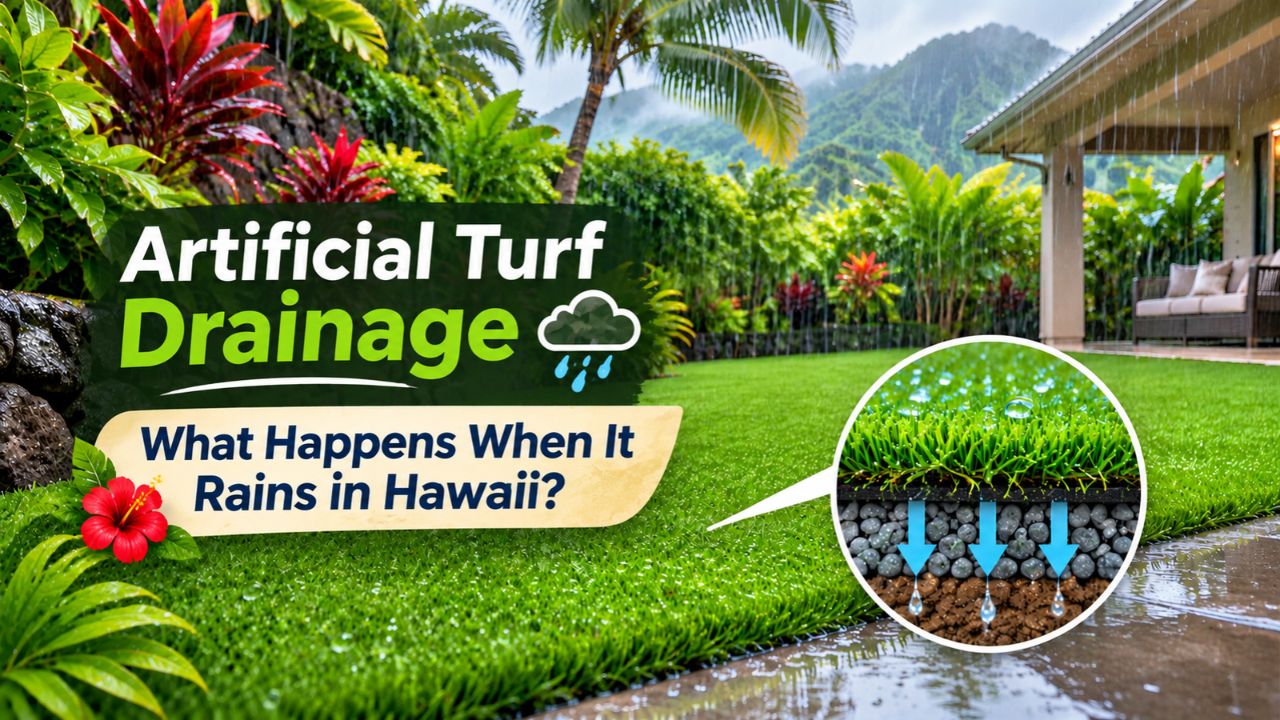
Unlike traditional lawns, artificial turf does not absorb water through natural grass roots or soil in the same way. Instead, many artificial turf products are manufactured with perforated backing that allows water to pass through the surface.
When rain falls on properly installed artificial grass, water typically follows this process:
- Water passes through the turf: Perforations in the backing allow rainwater to move beneath the synthetic grass.
- Water reaches the drainage layer: A properly prepared aggregate base helps distribute water beneath the turf.
- Water moves through the base: The underlying materials allow water to move toward suitable drainage areas.
- Excess water drains away: Proper grading and, where necessary, drainage systems direct water away from the installation.
The effectiveness of this process depends on the turf’s permeability, the underlying base materials, soil conditions, and the overall drainage design.
For properties in Hawaii, these installation details are particularly important because rainfall intensity and soil drainage characteristics can vary considerably between locations.
Why Is Proper Artificial Turf Drainage Important in Hawaii?
Hawaii experiences a range of weather conditions, from short tropical showers to prolonged periods of heavy rainfall. An artificial lawn that performs well during dry weather may develop problems if its drainage system cannot handle larger volumes of water.
Here are several reasons why proper drainage should be a priority.
1. Prevents Water Pooling on the Surface
Standing water is one of the most noticeable signs of poor artificial turf drainage.
When water cannot move through the turf and underlying layers efficiently, it may collect in low areas. These puddles can make outdoor spaces uncomfortable and limit how quickly the area becomes usable after rainfall.
Proper ground preparation, suitable turf backing, and appropriate grading help minimize this problem.
2. Helps Prevent Unpleasant Odors
Artificial grass does not eliminate the need to manage moisture and organic debris.
Rainwater can carry leaves, dirt, pet waste residue, and other organic materials into the turf. If moisture becomes trapped underneath the surface, these materials may contribute to unpleasant odors.
This can be particularly noticeable in backyards where pets regularly use artificial grass.
A well-designed drainage system, combined with routine cleaning, helps water move away and reduces the conditions that contribute to odor problems.
3. Protects the Artificial Turf Foundation
The foundation beneath artificial grass supports the entire installation.
If rainwater accumulates underneath the turf, it may contribute to erosion, movement of poorly secured base materials, or uneven areas. Over time, these problems can affect the appearance and performance of the lawn.
Proper excavation, aggregate preparation, compaction, and drainage planning help maintain a stable foundation.
4. Reduces Maintenance Problems After Heavy Rain
Artificial turf generally requires less routine maintenance than natural grass, but it is not completely maintenance-free.
When drainage is inadequate, property owners may need to deal with standing water, displaced infill, accumulated debris, and uneven surfaces.
A properly installed system makes it easier to maintain the turf and helps outdoor spaces recover more efficiently after rainfall.
What Causes Artificial Turf Drainage Problems?
Not every artificial grass installation handles rainfall equally well. Several installation and environmental factors can affect drainage performance.
Poor Ground Preparation
The condition of the ground beneath artificial turf has a direct impact on how water moves through the installation.
If the existing surface contains uneven areas, loose soil, or poorly prepared materials, rainwater may collect in certain sections.
Professional installation typically involves removing unsuitable materials, preparing a stable base, and establishing the appropriate surface levels before laying the turf.
Incorrect Slope or Grading
Artificial turf installations need appropriate grading to direct water toward suitable drainage areas.
When the surface is completely flat or contains unintended low spots, water may remain trapped instead of flowing away.
The correct slope depends on the property layout, surrounding structures, and available drainage outlets. It should be planned before installation rather than corrected after problems appear.
Insufficient Drainage Base
The aggregate base beneath artificial grass helps provide structural stability and allows water to move through the installation.
If the base material is unsuitable, poorly installed, or improperly compacted, water movement can become restricted.
The base should be designed according to the site’s soil conditions, expected rainfall, and intended use of the artificial turf.
Water management affects more than artificial grass. Understanding common landscape irrigation problems can also help property owners identify water distribution and runoff issues around their outdoor spaces.
Soil With Poor Natural Drainage
Some properties have soil conditions that naturally slow water movement.
For example, clay-heavy soils can drain more slowly than certain sandy or well-structured soils. In these situations, simply installing permeable artificial grass may not solve the property’s drainage challenges.
Additional drainage measures may be necessary to move excess water away from the installation.
Inadequate Drainage Design for Heavy Rainfall
A drainage system that handles ordinary showers may struggle during intense rainfall.
The installation should account for the property’s drainage patterns, surrounding hard surfaces, roof runoff, and the volume of water that may reach the turf.
Depending on site conditions, solutions may include drainage channels, perforated drainage pipes, or properly positioned collection systems.
How to Improve Artificial Turf Drainage Before Installation
Preventing drainage problems begins before the artificial grass is installed. The following considerations can help homeowners achieve better long-term performance.
1. Evaluate the Existing Ground Conditions
Start by examining the area where the turf will be installed.
Look for existing puddles, low spots, compacted soil, and locations where water naturally flows during rainfall.
Understanding these conditions helps determine what preparation and drainage measures may be necessary.
2. Install a Suitable Aggregate Base
A properly prepared aggregate base provides support beneath the artificial turf while allowing water to move through the installation.
The material selection, depth, and compaction requirements should reflect the property’s soil conditions and intended use.
Using an unsuitable base can compromise both drainage and surface stability.
3. Establish Proper Surface Grading
Before laying the turf, the installation area should be graded to encourage water movement toward an appropriate drainage destination.
This is especially important near buildings, walkways, patios, and other structures where unwanted runoff could create additional problems.
4. Consider Additional Drainage Solutions
Some properties require more than a standard aggregate base.
Depending on the amount of rainfall and existing ground conditions, additional solutions may include:
- French drains to collect and redirect subsurface water.
- Perforated drainage pipes beneath or alongside the installation.
- Channel drains to collect surface runoff.
- Catch basins to manage water from larger surrounding areas.
- Improved grading to prevent water from collecting in low spots.
The appropriate solution depends on the property. Not every artificial turf installation requires all these systems.
5. Choose Artificial Turf With Suitable Drainage Performance
Artificial grass products vary in construction, backing materials, and water permeability.
Before selecting a product, ask about its drainage specifications and whether its backing is designed to allow water to pass through.
It is also important to consider the intended application. A residential backyard, pet area, playground, and commercial landscape may have different drainage and performance requirements.
How Long Does Artificial Turf Take to Dry After Rain?
There is no single drying time for artificial turf after rainfall.
The time required depends on several factors:
- Rainfall intensity: Heavy rainfall introduces more water into the installation than a short shower.
- Turf permeability: Products with suitable drainage openings allow water to pass through the backing.
- Base preparation: A properly constructed base supports efficient water movement.
- Soil conditions: Poorly draining soil may slow the removal of water from beneath the installation.
- Weather conditions: Sunlight, temperature, humidity, and wind influence how quickly surface moisture evaporates.
A properly designed installation should allow rainwater to drain through the system rather than remain trapped beneath the turf. However, surface drying and subsurface drainage are two different processes.
Even when the underlying water has drained away, the synthetic grass fibers may remain damp until environmental conditions allow them to dry.
Is Artificial Turf Suitable for Hawaii’s Rainy Climate?
Yes, artificial turf can be a practical landscaping option for properties in Hawaii, provided the product and installation are appropriate for the local site conditions.
Its suitability depends on more than its appearance. Homeowners should consider drainage performance, UV resistance, material quality, infill selection, and the stability of the prepared base.
For properties exposed to frequent rainfall, proper drainage planning is especially important.
Before installation, consider these questions:
- Does the selected turf have a permeable backing?
- What type of aggregate base will be installed?
- Does the property have existing drainage problems?
- Where will excess rainwater flow?
- Will additional drainage infrastructure be necessary?
- Is the proposed system suitable for the property’s soil and rainfall conditions?
Addressing these questions early can help prevent expensive corrections after installation.
Artificial Turf Drainage Maintenance Tips
Even a professionally installed artificial lawn benefits from regular maintenance.
A few simple practices can help maintain drainage performance over time.
Remove leaves and debris regularly: Organic materials can accumulate on the turf and interfere with surface drainage.
Rinse pet areas: If pets use the artificial grass, periodic rinsing helps remove urine residue and other contaminants.
Inspect after heavy rainfall: Look for unusual puddling, soft spots, or areas where water appears to remain trapped.
Check drainage outlets: Keep accessible drains and collection points clear of leaves, soil, and other obstructions.
Address uneven areas early: Changes in surface levels may indicate movement or settlement beneath the turf.
If water continues to collect in the same location after rainfall, a closer inspection of the underlying base and drainage system may be necessary.
Frequently Asked Questions About Artificial Turf Drainage
Does artificial turf allow rainwater to pass through?
Many artificial turf products feature perforated backing that allows water to pass through into the underlying base. However, drainage performance varies by product and installation quality. Always check the manufacturer’s permeability specifications.
Will artificial grass flood during heavy rain in Hawaii?
Artificial grass itself does not prevent flooding. If rainfall exceeds the property’s drainage capacity or the underlying soil cannot absorb or redirect water quickly enough, water may accumulate. Proper grading and drainage planning help reduce this risk.
Does artificial turf need a drainage system?
Not every installation requires a separate drainage system. Some properties can manage rainfall through a properly prepared aggregate base and suitable grading. Others may require additional drainage infrastructure based on soil conditions, slope, and water runoff.
Is artificial turf suitable for homes with pets in Hawaii?
Artificial turf can be suitable for pet-friendly outdoor spaces. However, drainage, cleaning, infill selection, and odor management should be considered during installation. A well-designed system helps manage moisture and makes routine cleaning easier.
Can artificial turf be installed over concrete?
Yes, artificial turf can be installed over suitable concrete surfaces, provided the surface is stable and the installation includes an appropriate way for water to drain. Existing slopes, drainage outlets, and potential low spots should be evaluated before installation.
What should I do if water collects under my artificial turf?
Persistent water accumulation may indicate inadequate grading, restricted drainage, unsuitable base materials, or poor natural soil drainage. A professional inspection can help identify the cause and determine whether drainage improvements or base repairs are necessary.
Plan Your Artificial Turf Installation With Proper Drainage
Artificial turf can provide an attractive and functional outdoor surface for Hawaii properties, but successful installation requires more than selecting the right synthetic grass.
Rainfall patterns, soil conditions, surface grading, and base preparation all influence how effectively an artificial lawn handles water. Addressing these factors before installation helps reduce standing water, protect the foundation, and maintain the appearance of the finished landscape.
Whether you are upgrading a residential backyard or planning a larger commercial landscape project, proper drainage should be part of the installation plan from the beginning.
Looking for professional landscaping and artificial turf installation in Hawaii? Contact Hawaii Landscape Services to discuss your outdoor space and determine the right approach for your property.
Visit Hawaii Landscape Services to learn more about available landscaping solutions and installation services.